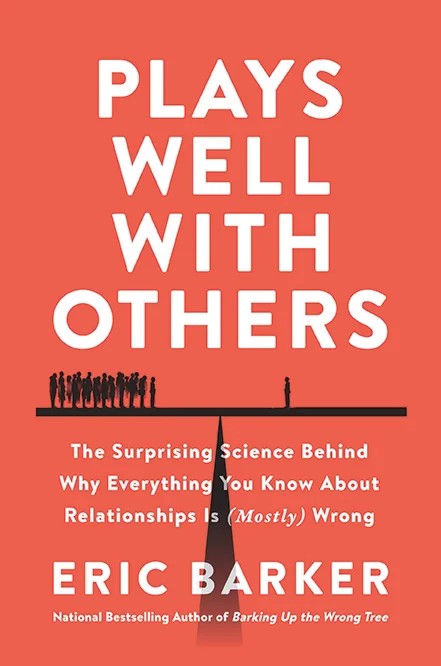
“Nice guys finish last.” Really? What does the research say?

nice guys finish last


“Nice guys finish last.” Is it true?

To some degree it depends on what area of life we’re talking about.

Let’s see what the research has to say.


Money

Nice guys finish last here. More agreeable people make less money:

…men who measured below average on agreeableness earned about 18% more—or $9,772 more annually in their sample—than nicer guys. Ruder women, meanwhile, earned about 5% or $1,828 more than their agreeable counterparts.

“Nice guys are getting the shaft,” says study co-author Beth A. Livingston, an assistant professor of human resource studies at Cornell University’s School of Industrial and Labor Relations.

Being ethical brings your salary down too:

Using a self-reported measure from a longitudinal survey of registrants for the Graduate Management Admissions Test, we find that ethical character is negatively associated with males’ wages.

And rude people have higher credit scores:

“…agreeableness was negatively related to your credit score,” said Jeremy Bernerth, assistant professor in LSU’s E. J. Ourso College of Business Rucks Department of Management.


Dating and Marriage 

The trait most associated with long, happy marriages is conscientiousness. That’s not the same thing as “nice” but we can mark it up as a win for the nice guys:

…our findings suggest that conscientiousness is the trait most broadly associated with marital satisfaction in this sample of long-wed couples.

As for dating and sex, we have to give that one to the bad boys, hands down:

In one survey of men, Trapnell and Meston (1996) found that nice guys who were modest, agreeable, and unselfish were disadvantaged in sexual relationships. Men who were manipulative, arrogant, calculating, and sly were more sexually active and had a greater variety of sexual experiences and a greater number of sex partners.


Leadership

This one is a toss-up. The research confirms that leadership is a tenuous balance.

You’d expect military leaders to be tough, right? But the Navy’s best commanding officers are supportive.

Via The Happiness Advantage: The Seven Principles of Positive Psychology That Fuel Success and Performance at Work:

In the U.S. Navy, researchers found, annual prizes for efficiency and preparedness are far more frequently awarded to squadrons whose commanding officers are openly encouraging. On the other hand, the squadrons receiving the lowest marks in performance are generally led by commanders with a negative, controlling, and aloof demeanor.

That said, US Presidents have a number of traits in common with psychopaths:

These findings indicate that the boldness associated with psychopathy is an important but heretofore neglected predictor of presidential performance, and suggest that certain features of psychopathy are tied to successful interpersonal behavior.

The best leaders are a balance. Not too assertive, but not too passive. They must balance kindness and toughness:

“If you’re too soft—no matter how competent and able you are—people may not respect your authority. But if you only have dominance and you don’t have great ideas, and you use force to stay in power, then people will resent you,” he concludes. “Being successful as a leader requires one to have both dominance and prestige.”


What About Life In General? 

 Overall, there are undoubtedly advantages to being a jerk:

In the workplace it’s difficult because, as Harvard professor Amy Cuddy explains, warmth and competence are seen as inversely related:

In a business context, she says, this means that “The more competent you are, the less nice you must be. And vice versa: Someone who comes across as really nice must not be too smart.” This pattern is the opposite of the halo effect: a plus on one dimension demands a minus on the other. The unconscious logic might be: If she were really competent, she wouldn’t need to be so nice; and conversely, the highly competent person doesn’t have to be nice—and may even have reached the top by stepping on others.

But let’s not forget about the advantages of being nice. Raises and promotions are easy to quantify, making the bad boys look good. But when you really dig into the research you see it’s not so one-sided.

Studies show nice guys have higher quality friendships, are better parents, have better academic and career performance, as well as better health:

…agreeableness, one of the Big Five personality dimensions, is linked with higher-quality friendships, successful parenting, better academic and career performance, and health… Based on the review of the literature, it is postulated that being agreeable may be the path to enduring interpersonal relationships, happiness, success, and well-being.

Confused yet? I hear you.

Luckily, Wharton professor Adam Grant, author of Give and Take: A Revolutionary Approach to Success, wraps it up very nicely.

Yes, nice people get screwed sometimes. That’s true.

Being nice also confers many advantages since people like and trust you. That’s true too.

So that’s why when you look at the whole picture, nice guys finish last…

And first:

What I find across various industries, and various studies is the Givers are most likely to end up at the bottom. That’s primarily because they end up putting other people first in ways that either burn them out, or will allow them to get taken advantage of and exploited by Takers.

Then I looked at the other end of the spectrum and said if Givers are at the bottom, who’s at the top? Actually, I was really surprised to discover, it’s the Givers again. The people who consistently are looking for ways to help others are over-represented not only at the bottom, but also at the top of most success metrics. 

Join 25K+ readers. Get a free weekly update via email here.

Related posts:

What 10 things should you do every day to improve your life?

10 things you didn’t know about kindness

Interview – The top Wharton Business School professor teaches you the right way to approach give and take

Life Lessons – Cornell researcher Karl Pillemer explains the most important things older people insist you need to know

life lessons


What life lessons can we learn from the people who have lived the longest?

Karl Pillemer of Cornell University interviewed 1200 people age 70 to 100+ for his book “30 Lessons for Living: Tried and True Advice from the Wisest Americans” asking them:

 ”If you look back over the course of your life, what are the most important lessons you learned that you would like to share with younger people?”

I’ve posted about Karl’s research a number of times but was so fascinated by it I needed to speak to him and learn more.

Karl and I talked about older people’s advice on happiness, career, regrets and the most important life lessons to keep in mind as you age.

My conversation with Karl was nearly an hour long, so for brevity’s sake I’m only going to post edited highlights here.

If you want the extended interview I’ll be sending it out with my weekly newsletter on Sunday.

Join here.

———————————————

The Single Most Important Lesson Older People Think Young People Need To Know

Karl:

I would say lesson number one, endorsed by almost all of these 1,200 people, and one in which people tended to be rather vehement, is “Life is short.” Or life is really short, or life is really, really short. Or as one ex-engineer said, “It passes by in a nanosecond.”

The older the person was, the centenarians were probably the most likely to say, “I can’t believe how quickly life passed.” One direct quote that I love, one woman, who was 99, said to me, “I don’t know what happened, because the next thing you know, you’re 100.”

They want to pound this awareness into young people, not to depress them, but to encourage them to make better choices. In the field of gerontology, there is a whole theory called “socioemotional selectivity theory.” What they argue is that the one thing that makes people different at 70 and beyond, from younger people, developmentally, is a sense of limited time horizon. You become really aware that your days are numbered. Rather than that being so depressing, people start to make better choices. That’s really what I’ve found. People argue, for example, that based on their sense of life of being short, how these young people should value their experiences and people over things.

Some of their lessons which emanate from this “life is short” perspective are reasonably obvious. They argue that you should savor small, daily experiences and make the most of every day. They argue that some people should travel more. This was extremely important to them, because in many cases the older American’s younger lives were extremely local, sometimes not even leaving the county they grew up in until World War II, in the case of men.


Happiness

Karl:

What I consistently heard was that you can choose to be happy on a day-to-day basis, despite external circumstances.

A lot of them think of young people as believing that you can be happy if only something occurs: if only they lose weight, gain weight, find a partner, lose a partner, get new job, get a different job, etc. They argue that once you hit 70, if you can’t learn to be happy in spite of bad things happening to you, you aren’t going to be happy for those 20 or 30 years. Almost everybody learned at some point in their life, that happiness is more of a choice than it is a condition. The reason why that’s not just a cliche to these folks is that they’ve been through all the stuff, especially in their 80′s and 90′s, that keeps young people awake at night. They know what they’re talking about. Almost everybody can point to a moment, or a day, or a week where they were feeling miserable about something, and they changed their attitude rather than the circumstance.

Those are really two of the most fundamental lessons, that happiness is a choice, not a condition and you take responsibility for happiness.


How Much Did The Advice Vary?

Karl:

Did African-Americans differ from white, did immigrants differ, or even did men and women differ? The lessons themselves were often identical. How people got there was dramatically different. Many people said find work you love, but when I interviewed one of the Tuskegee Airmen, the way he defined work he loved was battling unbelievable discrimination. That seems fairly incomprehensible today. The way he got there was different, but his lessons were very similar.

I think it’s really interesting that there were differences in how they answered the questions, but almost no differences in the kinds of lessons they emphasized in each area. With this new book on marriage, what we’re finding is essentially, exactly the same thing. For example, we’re interviewing, also, people in long term same-sex couples, who were, in some cases, just able to get married. The responses of gay couples about their advice for marriage, if you took out the references to gender, they are virtually identical to what married couples say. There were findings on this that there aren’t a lot of individual differences by different types of people in the kinds of lessons you come up with over 80, 90, or 100 years of living. There does seem to be something in common that people draw from life experience.


What Books Do You Recommend?

Karl:


Career

Karl:

I expected that these members of the so-called ‘Greatest Generation,’ when you ask them about work and career, I thought they would say, “Go out and get the safest and highest-paying job you can get, and stick with it, because life is uncertain, the rug can be pulled out from under you at any time, so find yourself a high-paying, safe job and stay in it.” 100%, or as close to unanimous as anything in this project, said the exact opposite.

Over and over people said, “Choose work for its intrinsic rewards, choose it for its sense of purpose, choose it because you love it. Not for the financial rewards primarily.” They don’t want anybody to be a starving artist, they think you should be comfortable, but they cringe at the kinds of things I hear my students say, “I’d really love to be a chef, but I’m going to go into the financial industry for ten years and make money first.” Their argument, which is based on this notion of how short life is, is that you will later on view it as not having been worth it. We think of old people as hide-bound, or not risk takers. I can’t tell you how many people said — and got worked up about it — “Don’t get stuck in a box, do it now, life is short so find work you love. If you have to get up in the morning and go to work in the morning to a job you hate, it’s time to get out.”

———————————————

If you want the extended interview (where Karl discusses what the happiest older people had in common, as well as their biggest regret) I’ll be sending it out with my weekly newsletter on Sunday.

Join here.

More about Karl’s research into life lessons:

What is the single most important life lesson older people feel young people need to know?

What five secrets about life can you learn from those who have lived the longest?

How can you live a life without regret?

What 6 secrets can the oldest couples teach us about how to have a long, happy relationship?

What does nearly every genius have in common when it comes to work habits?

genius
A very interesting new book, Daily Rituals: How Artists Work, examines the work habits of over 150 of the greatest writers, artists and scientists.

What does nearly every genius have in common?

Those interested in the 10,000 hour theory of deliberate practice won’t be surprised — the vast majority of them were complete and unapologetic workaholics.

Via Daily Rituals: How Artists Work:

William Faulkner:

During his most fertile years, from the late 1920s through the early ’40s, Faulkner worked at an astonishing pace, often completing three thousand words a day and occasionally twice that amount. (He once wrote to his mother that he had managed ten thousand words in one day, working between 10: 00 A.M. and midnight— a personal record.) “I write when the spirit moves me,” Faulkner said, “and the spirit moves me every day.”

Maya Angelou:

Sometimes the intensity of the work brings on strange physical reactions— her back goes out, her knees swell, and her eyelids once swelled completely shut. Still, she enjoys pushing herself to the limits of her ability. “I have always got to be the best,” she has said. “I’m absolutely compulsive, I admit it. I don’t see that’s a negative.”

H.L. Mencken:

His compulsiveness meant that he was astonishingly productive throughout his life— and yet, at age sixty-four, he could nevertheless write, “Looking back over a life of hard work  …   my only regret is that I didn’t work even harder.”

Musician Glenn Gould:

From the time he retired from public performances in 1961, when he was thirty-one years old, Gould devoted himself completely to his work, spending the vast majority of his time thinking about music at home or recording music in the studio. He had no hobbies and only a few close friends and collaborators, with whom he communicated mostly by telephone. “I don’t think that my life style is like most other people’s and I’m rather glad for that,” Gould told an interviewer in 1980. “[ T] he two things, life style and work, have become one. Now if that’s eccentricity, then I’m eccentric.”

Alexander Graham Bell:

As a young man, Bell tended to work around the clock, allowing himself only three or four hours of sleep a night… When in the throes of a new idea, he pleaded with his wife to let him be free of family obligations; sometimes, in these states, he would work for up to twenty-two hours straight without sleep.

Van Gogh:

“Today again from seven o’clock in the morning till six in the evening I worked without stirring except to take some food a step or two away,” van Gogh wrote in an 1888 letter to his brother, Theo, adding, “I have no thought of fatigue, I shall do another picture this very night, and I shall bring it off.”

Artist Chuck Close:

“Inspiration is for amateurs,” Close says. “The rest of us just show up and get to work.”


What else did many have in common?

  • There were more morning people than night owls. Most had a clear routine. The majority woke early, worked until midday, took a break for a few hours then resumed work until dinner. Most seemed to use the evening hours for relaxation and socializing.
  • Going for walks was another pattern. Tchaikovsky, Nathaniel Hawthorne, Georgia O’Keefe and many others had long walks as part of their daily routine.
  • Kids, don’t try this at home but copious amounts of drugs, alcohol and smoking was mentioned as well. Balzac regularly drank over 50 cups of coffee during a work session; Freud smoked as many as 20 cigars a day for decades; there was no shortage of alcoholics, and I was surprised just how common the use of amphetamines was.

Philosopher Jean-Paul Sartre:

Via Daily Rituals: How Artists Work:

…he turned to Corydrane, a mix of amphetamine and aspirin then fashionable among Parisian students, intellectuals, and artists (and legal in France until 1971, when it was declared toxic and taken off the market). The prescribed dose was one or two tablets in the morning and at noon. Sartre took twenty a day… “His diet over a period of twenty-four hours included two packs of cigarettes and several pipes stuffed with black tobacco, more than a quart of alcohol— wine, beer, vodka, whisky, and so on— two hundred milligrams of amphetamines, fifteen grams of aspirin, several grams of barbiturates, plus coffee, tea, rich meals.”

Mathematician Paul Erdos:

Via Daily Rituals: How Artists Work:

Erdos owed his phenomenal stamina to amphetamines— he took ten to twenty milligrams of Benzedrine or Ritalin daily. Worried about his drug use, a friend once bet Erdos that he wouldn’t be able to give up amphetamines for a month. Erdos took the bet and succeeded in going cold turkey for thirty days. When he came to collect his money, he told his friend, “You’ve showed me I’m not an addict. But I didn’t get any work done. I’d get up in the morning and stare at a blank piece of paper. I’d have no ideas, just like an ordinary person. You’ve set mathematics back a month.” After the bet, Erdos promptly resumed his amphetamine habit, which he supplemented with shots of strong espresso and caffeine tablets. “A mathematician,” he liked to say, “is a machine for turning coffee into theorems.”

As the Erdos anecdote illustrates, many of the drugs (especially the amphetamines) were not used for pleasure, but as a way to increase productivity and output.

Overall, the message is clear. Work, work, work. To be a genius at your craft it’s all about the hours and dedication.

Via Daily Rituals: How Artists Work

“Sooner or later,” Pritchett writes, “the great men turn out to be all alike. They never stop working. They never lose a minute. It is very depressing.”

Join 25K+ readers. Get a free weekly update via email here.

Related posts:

What does it take to become an expert at anything?

Is it true that 10,000 hours of practice will make you an expert at something?

Checklist: Are you doing these five things to be the best?